Why the Cute Baby Animal Bear Character Design Captivates Audiences
There is a specific kind of visual magic that happens when you combine the raw power of a bear with the innocent charm of a newborn. This is the core appeal of the Cute Baby Animal Bear Character. It is not just a simple drawing; it is a carefully constructed persona. When you look at this design, you aren't just seeing a wild animal. You are seeing a character with a story, likely one involving honey pots, forest adventures, and cozy naps. For designers and entrepreneurs, understanding this emotional connection is the first step to utilizing the asset effectively. It bridges the gap between the majestic nature of wildlife and the comforting familiarity of childhood nursery rhymes.
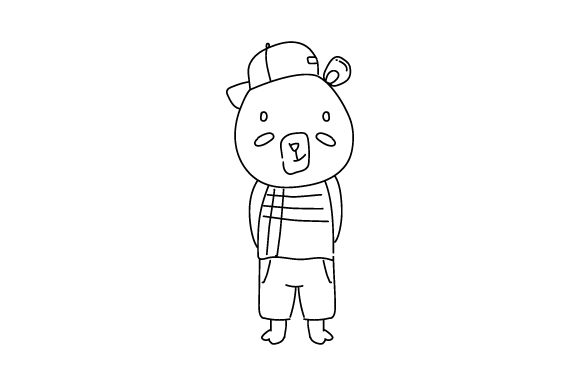
Visually, this character likely relies on soft, rounded geometry. Sharp angles are the enemy of cuteness. The appeal of this bear lies in its proportions—perhaps oversized paws, a slightly bulbous tummy, and eyes that convey curiosity rather than predatory instinct. The line art illustration design aspect is crucial here. By stripping away complex shading and focusing on clean contours, the design becomes incredibly versatile. It allows the character to fit into various aesthetic styles, from minimalist modernism to rustic farmhouse vibes, depending on the color palette applied. It is a premium font of character design—reliable, scalable, and emotionally resonant.
The Versatility of Line Art in Modern Branding
In a digital landscape saturated with gradients and 3D renders, the simplicity of line art offers a breath of fresh air. The Cute Baby Animal Bear Character serves as a perfect case study in how simplicity drives engagement. Because the illustration relies on clean lines, it functions exceptionally well across different mediums. Think about the constraints of packaging design. You need a logo or mascot that is legible on a tiny shampoo bottle label, yet striking enough to dominate a billboard. Line art scales infinitely without losing quality, making it a superior choice for brands that value clarity.
This asset is particularly powerful for those involved in editorial design and publishing. Imagine a children’s book or a parenting magazine. The bear character can act as a recurring guide or narrator. However, its utility extends beyond the obvious. In web design, a well-placed illustration can break up heavy blocks of text, guide the user’s eye down the page, or humanize a sterile "404 Error" page. For social media graphics, the character becomes a recognizable face for the brand. Consistency is key in building a brand identity, and using a central character across all touchpoints—from Instagram stories to email headers—creates a cohesive narrative that audiences learn to trust.
Practical Applications for Designers and Entrepreneurs
When you download this asset, you are receiving a toolkit for visual storytelling. The file formats—AI, EPS, JPG, and PNG—are the industry standard for a reason. The vector files (AI and EPS) are your workhorses. They allow you to open the Cute Baby Animal Bear Character in Adobe Illustrator and modify every single anchor point. You can change the stroke weight to make the lines bolder for a logo design, or you can alter the fill colors to match specific client hex codes. The raster files (JPG and PNG) are for quick deployment. The PNG format, with its transparent background, is essential for layering the bear over photographs or complex backgrounds in social media graphics without the hassle of masking.
For small business owners, this asset offers a cost-effective way to generate professional design assets. You do not need to commission a custom illustration from scratch for every new product line or seasonal sale. Instead, you can adapt this bear to fit the context. Put a Santa hat on it for December promotions. Have it holding a heart for Valentine's Day. This kind of adaptability is what separates amateur branding from professional, strategic visual hierarchy. It ensures that your marketing materials look polished, which in turn signals to your customers that your products or services are also high-quality.
Integrating the Character into Print and Digital Ecosystems
The distinction between print and digital often causes friction in design workflows, but this asset handles the transition gracefully. In print design—think business cards, flyers, or merchandise like tote bags—the line art ensures that the image reproduces crisply even on lower-resolution printers. It avoids the muddy look that often plagues photographic prints. For crafters and hobbyists, the Cute Baby Animal Bear Character is a goldmine. It can be used for stencil making, embroidery patterns, or vinyl decals for mugs and tumblers. The clean lines make it easy for cutting machines (like Cricut or Silhouette) to trace the path accurately.
From a strategic marketing perspective, using a character in your brand identity fosters a deeper emotional connection than text alone. We are hardwired to respond to faces and anthropomorphic features. When a small business owner uses this bear, they are not just selling a product; they are offering a friend. This is particularly effective in industries like wellness, children's education, eco-friendly goods, and pet care. The bear symbolizes protection, warmth, and approachability. By integrating this creative font of imagery into your web design and marketing collateral, you reduce the psychological distance between the brand and the consumer.
Optimizing Your Workflow with Included File Formats
To get the most out of this package, you need to understand the specific strengths of the provided files. The EPS file is particularly valuable if you are working with clients or printing houses that use older software or require high compatibility. It preserves the vector data perfectly. The AI file is the native environment for editing, offering the most control over layers and paths. When you open the AI file, take a moment to explore the line art illustration design. Look at how the strokes are constructed. Are they uniform width, or do they have a calligraphic taper? Understanding these details allows you to maintain the integrity of the design even while customizing it.
The JPG files are best used for web contexts where file size is a concern, or for mockups where you just need a visual representation. However, always default to PNG when placing the bear over a background. This ensures the visual hierarchy of your design remains clean, with the bear popping off the page rather than sitting inside an awkward white box. Whether you are creating a children's coloring book, a startup's mascot, or a series of stickers, the technical versatility of these files ensures you spend less time troubleshooting and more time creating.
Final Thoughts on Character-Driven Design
Design trends come and go, but the appeal of a well-drawn character remains constant. The Cute Baby Animal Bear Character is more than just a doodle; it is a strategic asset for anyone looking to inject personality into their projects. It works because it taps into universal feelings of comfort and joy. For the designer, it offers flexibility and ease of use. For the entrepreneur, it offers a shortcut to a professional brand identity. By leveraging the clean, scalable nature of the line art and the versatility of the file formats, you can ensure that this bear becomes a memorable part of your visual language, resonating with audiences across every platform you touch.